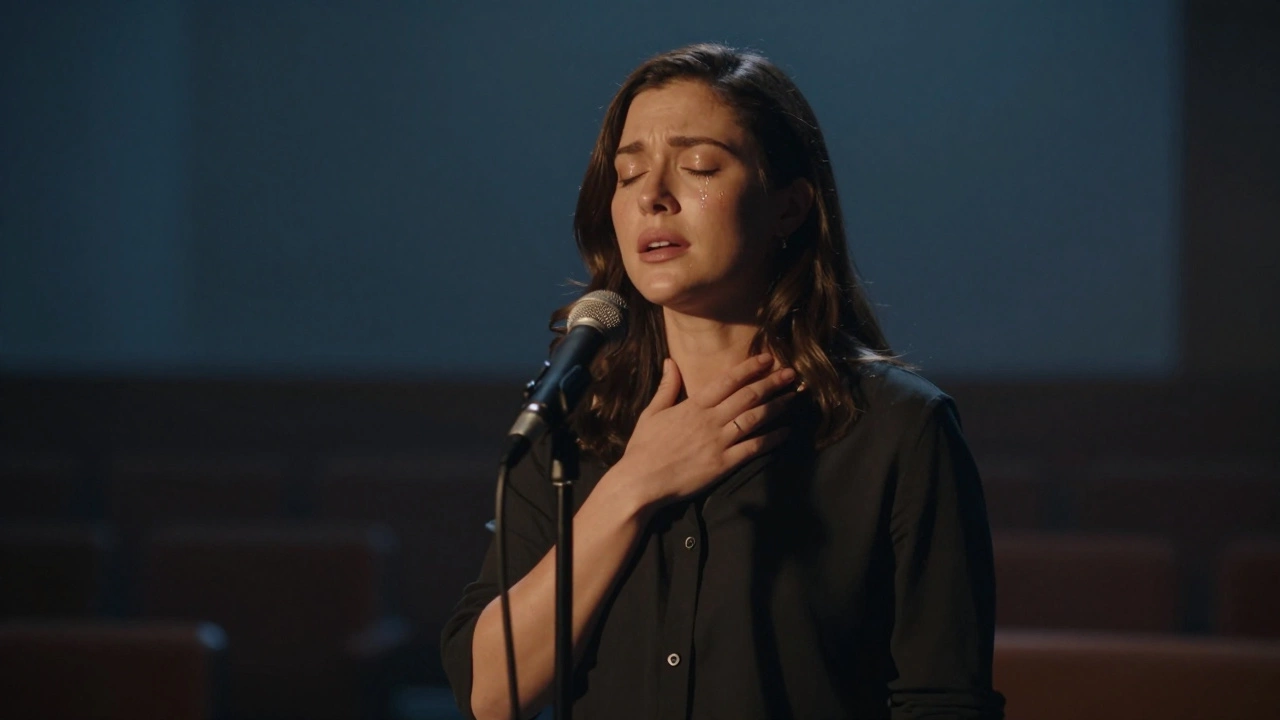
Emotional Cry Simulator
Select Your Technique
How This Works
Each technique triggers physiological responses that mimic crying. Higher values increase emotional authenticity while maintaining vocal control.
Your Cry Profile
Ever listened to a song and felt your chest tighten, your eyes well up, even though you didn’t know the story behind it? That’s not luck. It’s not magic. It’s someone who learned how to force a cry - not by faking tears, but by tapping into something real and making it audible.
For singers, actors, and instrumentalists, the goal isn’t to sob on stage. It’s to make the listener cry. And that’s harder than it sounds. You can’t just think of a sad memory and expect your voice to crack. Emotion doesn’t work like a faucet. But you can learn to build it - step by step - until it breaks through.
What Does It Mean to Force a Cry?
"Forcing a cry" sounds like a contradiction. If it’s forced, isn’t it fake? Not in music. In performance, "forcing" means deliberately creating the conditions for raw emotion to surface - even if you’re not feeling it in the moment. It’s control, not chaos.
Think of it like a firefighter training for a blaze. They don’t wait for a fire to start to practice. They simulate it. They rehearse the heat, the smoke, the panic - so when it’s real, their body knows what to do. Same with crying in music. You’re not pretending to be sad. You’re training your voice, breath, and body to respond to sadness as if it’s real.
The Three Pillars of Emotional Singing
There are three things every singer who makes people cry has mastered: breath, vowel shape, and microtiming.
- Breath - Not deep, not controlled. Broken. Shaky. A sob isn’t a full inhale. It’s a gasp that catches. When you sing a long note and let your breath waver - just slightly - it mimics the body’s natural response to grief. Try holding a note and letting your diaphragm hiccup once, mid-phrase. That’s the sound of someone trying not to break.
- Vowel shape - Open vowels like "ah" and "oh" are warm. Closed vowels like "ih" and "uh" are tight. When you’re crying, your throat tightens. Sing "I’m so alone" on an "ih" vowel, then on an "ah." The first one feels like a choke. The second feels like surrender. Use the tight vowels on the words that carry the weight.
- Microtiming - The best emotional performances don’t land on the beat. They hover just behind it. A note that arrives a tenth of a second late feels like hesitation. Like someone pausing because they can’t speak. Practice singing a phrase slightly behind the click track. Not enough to sound off, just enough to feel human.
Build the Memory, Don’t Chase It
Telling yourself to think of your dead dog won’t work if you’re on stage. Your brain shuts down under pressure. Instead, build a sensory anchor.
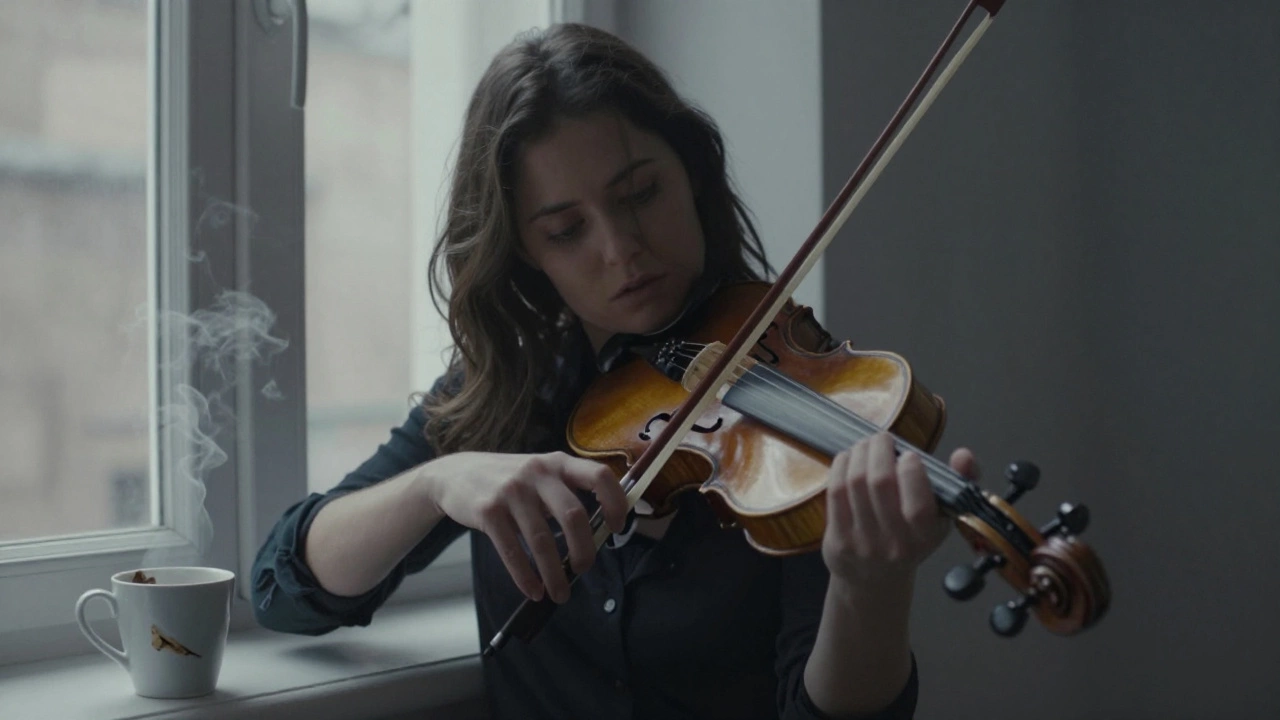
Take a line from your song - say, "You left the coffee cup on the counter." That’s not a dramatic moment. But it’s specific. Now, picture the cup. The steam rising. The chipped handle. The way the light hit it at 7 a.m. That’s not a memory of loss. It’s a memory of routine. And routines are what vanish when someone’s gone.
Do this before every performance. Not for five minutes. For 30 seconds. Just visualize that one small, ordinary thing. Your body remembers it. Your voice follows.
Physical Triggers That Work
Your body talks before your mind does. If you want your voice to tremble, make your body tremble first.
- Press your tongue gently against the roof of your mouth while singing. It creates a slight blockage - like you’re swallowing tears.
- Hold your throat lightly with your fingers as you sing. Not to squeeze. Just to remind your vocal cords they’re vulnerable.
- Let your shoulders slump slightly. Posture shapes emotion. Standing tall = strength. Slumped = surrender.
These aren’t tricks. They’re cues. Your body doesn’t know the difference between acting and feeling. It just responds.
Use Silence Like a Weapon
The most powerful cry isn’t a sob. It’s the silence after one.
Listen to Adele’s "Someone Like You." The moment she says, "Never mind, I’ll find someone like you," she doesn’t sing the next line. She just stops. For three seconds. No breath. No noise. Just air. That’s where people break.
Practice inserting a silent pause after a key lyric. Not a breath. A void. Let the audience fill it with their own grief. That’s when they cry - not because you’re sad, but because they remember.
What Doesn’t Work
Don’t fake a sob. Don’t sniffle on purpose. Don’t widen your eyes and look up like you’re about to cry. These are the signs of bad acting - and they kill authenticity.
Also, avoid forcing emotion through volume. Screaming doesn’t equal feeling. Sometimes, the quietest note you’ve ever sung is the one that shatters someone.
And never rely on a personal tragedy. If you’re still raw, your emotion becomes self-indulgent. The audience feels your pain, not the song’s. The goal isn’t to heal yourself. It’s to give someone else a place to release theirs.
Real Examples, Not Theory
Listen to Billie Holiday’s "Strange Fruit." She doesn’t scream. She doesn’t cry out. She lets each word hang, then drop. Her voice cracks on "pastoral scene of the gallant south," not because she’s upset - but because she’s trained her body to let the weight of the words break her.
Or consider Freddie Mercury in "Somebody to Love." The high note in the bridge? It’s not perfect. It’s strained. It’s almost out of control. That’s not a vocal flaw. That’s emotional engineering. He didn’t hit that note - he surrendered to it.
And then there’s the violinist Hilary Hahn, playing the slow movement of Bach’s Sonata No. 1. She doesn’t play with vibrato. She plays with silence between notes. The space between sounds becomes the cry.
Practice Like a Surgeon
You wouldn’t walk into surgery without practicing the incision. Don’t walk on stage without practicing the cry.
Here’s a simple drill: Take one line from a song. Sing it five times. First, with no emotion. Just pitch and rhythm. Second, with forced sadness - fake it. Third, use the breath technique. Fourth, use the vowel shape. Fifth, use the silence after.
Record yourself. Listen back. Which version made you feel something? That’s your target.
Do this daily. Not for 30 minutes. For five. Five minutes a day, focused, builds more emotional muscle than an hour of random wailing.
Why This Matters Now
In 2026, music is louder, faster, more polished. Algorithms reward perfection. But humans still crave imperfection. They still need to feel seen in their grief.
The artists who survive aren’t the ones with the clearest tone. They’re the ones who let their voice break - just enough - to remind us we’re still alive.
Forcing a cry isn’t about being dramatic. It’s about being honest. And in a world full of filters, that’s the rarest sound of all.
Can you really cry on cue during a live performance?
Yes - but not by trying to feel sad. You cry on cue by rehearsing the physical and vocal cues that mimic crying: shaky breath, tight vowels, delayed timing. Your body learns to respond to those cues like a reflex. It’s not emotion driving the sound - it’s technique guiding the emotion.
Is it better to use real memories or imagined ones?
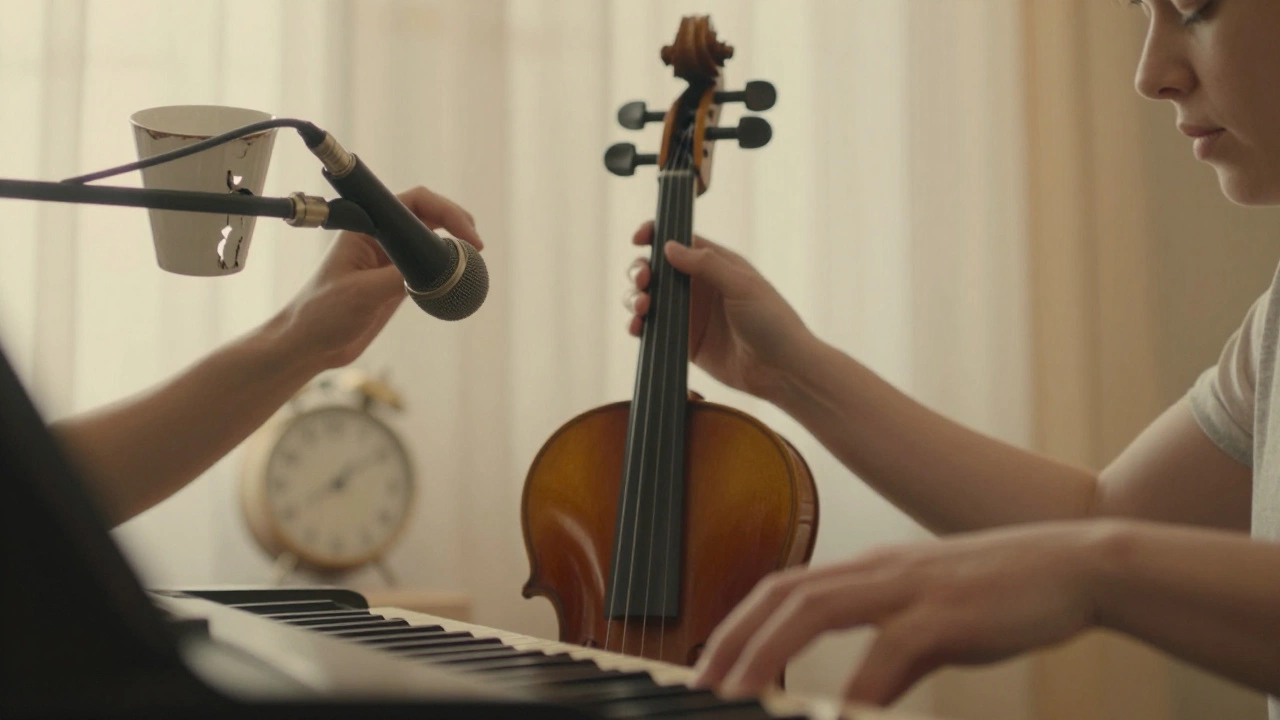
Imagined ones. Real memories can overwhelm you or make your performance self-centered. Instead, use specific, sensory-rich details from the song - a chipped cup, a half-lit room, a paused clock - and build a tiny, quiet scene around it. That’s enough to trigger real physiological responses without dragging you into trauma.
Do instrumentalists need to force a cry too?
Absolutely. A violinist’s bow pressure, a pianist’s pedal timing, a guitarist’s vibrato - all can mimic the rhythm of a sob. The cry isn’t in the voice. It’s in the space between notes, the slight delay, the breath-like pause. Instrumentalists who cry don’t need lungs - they need listening.
What if I get too emotional and can’t finish the song?
That’s not failure - that’s success. But if it happens often, you need better anchors. Use micro-visualizations instead of full memories. Keep your emotional trigger small: a color, a texture, a single object from the lyrics. That’s enough to evoke feeling without drowning in it.
Can you force a cry in genres other than ballads?
Yes. Even in punk or metal, emotion comes through restraint. A scream that cuts off too soon. A riff that stumbles on purpose. A drum fill that doesn’t land. The cry isn’t about genre - it’s about vulnerability. The most powerful cry in a heavy song is the one you almost didn’t let out.