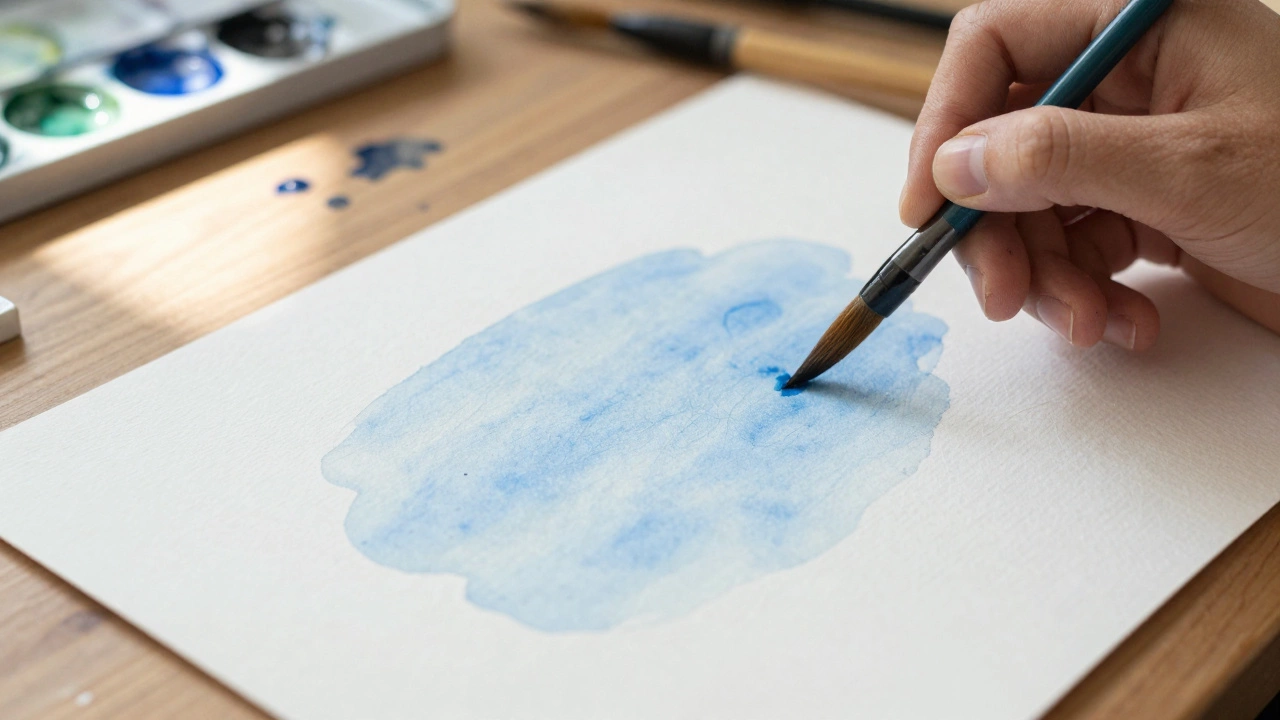
Watercolor Surface: What It Is and How It Changes Your Painting
When you paint with watercolor, the watercolor surface, the physical material your paint touches—usually paper, but sometimes board or fabric. Also known as watercolor support, it doesn't just hold your image—it controls how the paint flows, bleeds, and dries. Most people think it’s just paper. But the wrong surface can turn a bright wash into muddy streaks, or make your details disappear before you finish them.
The watercolor paper, a specially sized, textured, and sized paper designed to handle wet media without warping or disintegrating is the most common surface, and not all of it is the same. Weight matters—140 lb is the sweet spot for beginners, but 300 lb won’t buckle even when soaked. Texture? Cold press gives you grip for detail, hot press is smooth for fine lines, and rough? It grabs pigment and creates natural granulation. Then there’s sizing—the internal coating that keeps paint from soaking in too fast. Poor sizing means your colors bleed uncontrollably. Good sizing lets you lift, glaze, and layer without turning your painting into a swamp.
Some artists skip paper entirely and paint on watercolor board, a rigid panel coated with watercolor paper or gesso, ideal for travel or when you need a stable base. It’s expensive, but it doesn’t curl. Others use fabric or wood, but those need special preparation. The point isn’t to collect every surface—it’s to pick one that matches your style. If you like soft blends and loose washes, go rough. If you want crisp details and fine lines, hot press is your friend. If you’re layering five or six glazes? You need a surface that won’t break down under all that water.
And here’s what no one tells you: your watercolor surface isn’t just a canvas—it’s a partner. It reacts. It holds back. It surprises you. The best artists don’t fight it—they learn its rhythm. You’ll find that in the posts below: how to layer without muddying, why some papers hold color better, and how to choose a surface that doesn’t limit your creativity. Whether you’re just starting or you’ve painted for years, the right surface makes all the difference. Let’s look at what works—and what doesn’t.