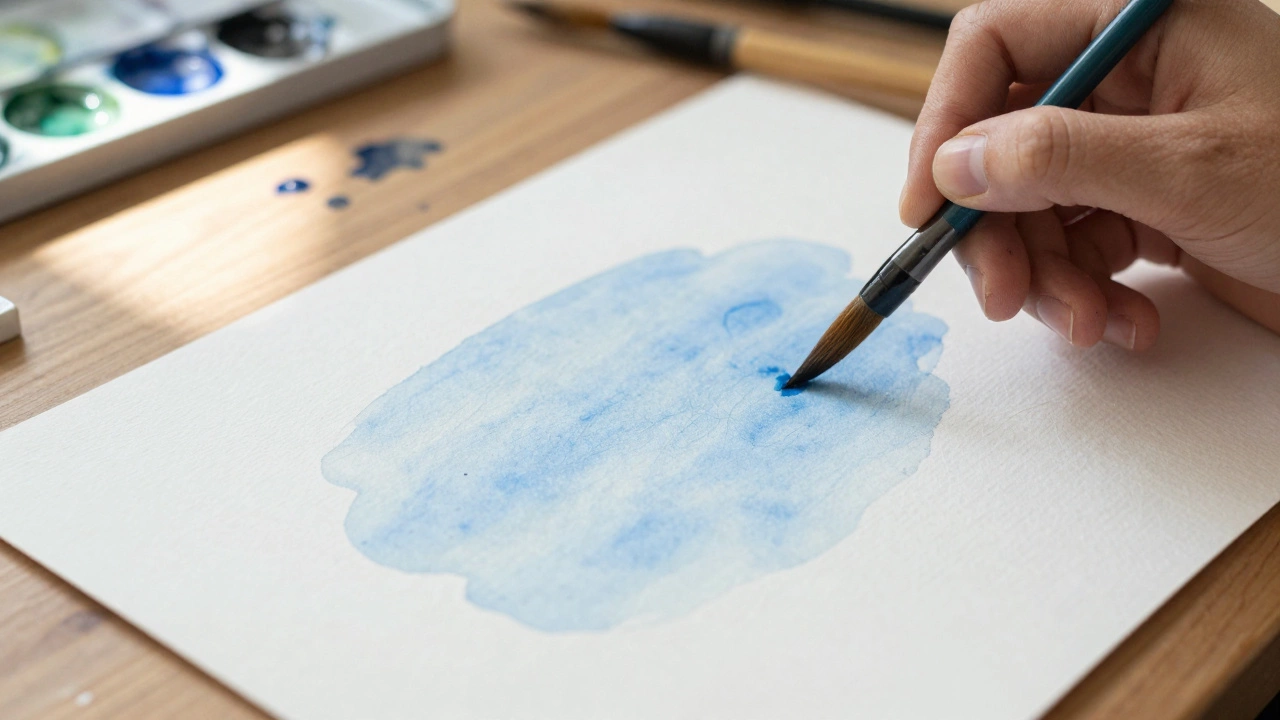
Watercolor Paper: What It Is and How to Choose the Right One
When you pick up a brush and start painting with watercolors, the watercolor paper, a specially engineered surface designed to handle wet media without warping or bleeding. Also known as watercolor board or cold press paper, it’s not just a surface—it’s the silent partner in every wash, gradient, and detail you create. Regular printer paper will buckle, bleed, and turn to mush. Watercolor paper holds up because it’s thicker, sized with gelatin, and built to absorb water without falling apart. It’s the difference between a muddy mess and a glowing, luminous piece that looks like it’s lit from within.
Not all watercolor paper is the same. The three main types—cold press, a slightly textured surface that holds pigment well and is ideal for beginners, hot press, a smooth surface perfect for fine detail and sharp lines, and rough, a heavily textured surface that creates natural grain effects—each changes how your paint behaves. Cold press is the most popular because it’s forgiving and versatile. Hot press is what you reach for when you’re painting birds, architecture, or intricate patterns. Rough? That’s for dramatic skies, textured trees, and loose, expressive strokes. The weight matters too. 140 lb is the sweet spot for most artists—thick enough to handle multiple washes without stretching, light enough to fit in a sketchbook. Go heavier, like 300 lb, and you can paint without taping it down at all.
Layering watercolor depends on this paper. If you’re building up color slowly, like in the posts about watercolor layering and watercolor techniques, the paper needs to dry completely between layers. Cheap paper will pill, fade, or turn gray. Good paper lets you lift color, glaze over washes, and preserve the white of the paper for highlights. It’s not about being expensive—it’s about being reliable. Brands like Arches, Saunders Waterford, and Canson Montval aren’t just names—they’re promises. They’ve been tested by artists for decades. And when you’re trying to capture the glow of morning light on a lake, or the soft blur of rain on a window, you don’t want your paper to betray you.
It’s not just about the paper itself—it’s about what you do with it. The same brushstroke on different paper gives different results. The same technique—like wet-on-wet or dry brushing—can feel completely different depending on the texture and absorbency. That’s why so many artists spend years experimenting. That’s why you’ll find guides here on easy watercolor subjects for beginners and how to avoid mud when layering. You’re not just buying paper. You’re choosing the stage for your art. And the right stage makes all the difference.
Below, you’ll find real advice from artists who’ve been there—how to pick the right paper for your style, what to avoid, and how to get the most out of every sheet. Whether you’re just starting or you’ve been painting for years, there’s something here that’ll make your next piece better.