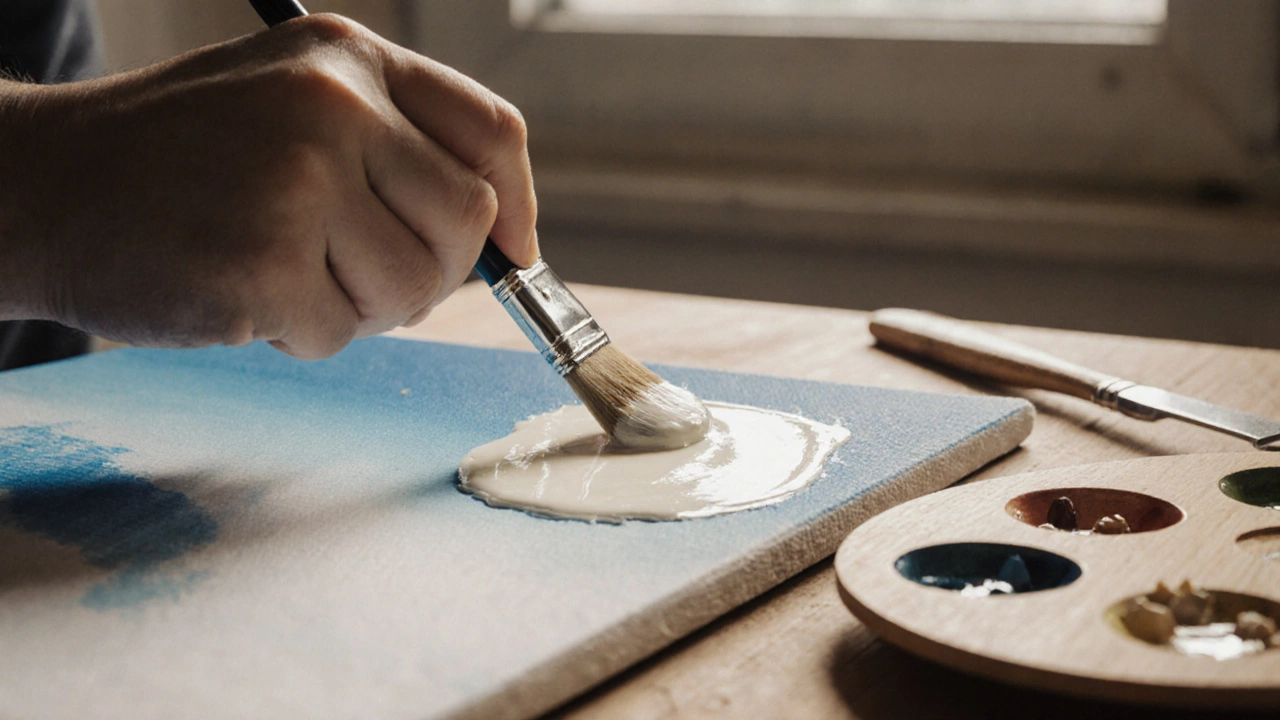
How to Get Smooth Oil Painting: Techniques for a Professional Finish
Learn how to achieve a smooth, professional finish in oil painting with practical techniques for blending, glazing, brushwork, and layering. No more brush strokes or rough patches.
When you see an oil painting that seems to glow from within—like light is coming from the canvas itself—that’s often the work of oil painting glazing, a technique where thin, transparent layers of paint are applied over dried underpainting to build depth and luminosity. Also known as glaze painting, it’s not about covering the surface—it’s about revealing it, layer by layer. This method doesn’t just make colors richer; it changes how light moves through the paint, creating a depth that flat, thick brushstrokes can’t match.
Glazing works because oil paint dries slowly and stays workable. You start with a solid underpainting—usually in monochrome or muted tones—then add transparent layers of pure pigment mixed with a medium like linseed oil or glazing medium. Each layer must be completely dry before the next goes on. That’s the key: patience. A single glaze might take a day or two to dry. But when you stack three or four of them, the result is a color that feels alive. Think of it like stained glass: the light hits the top layer, bounces off the one below, and comes back to your eye with more richness. It’s why old masters like Rembrandt and Titian used it. And it’s why modern artists still rely on it for portraits, still lifes, and landscapes that demand realism and soul.
Glazing isn’t just for realism, though. Even abstract artists use it to create subtle shifts in tone without mixing muddy colors. The trick is using the right pigments. Some, like cadmium red or ultramarine blue, glaze beautifully. Others, like titanium white or earth tones, are too opaque and will kill the effect. You also need the right medium—too much oil and the paint stays sticky; too little and it cracks. Most artists keep a small bottle of glazing medium on hand, mixed just enough to make the paint flow like water but still hold its shape.
And here’s the part most beginners miss: glazing isn’t about adding more paint. It’s about adding more light. Every layer you add should be thinner than the last. You’re not building volume—you’re building atmosphere. That’s why glazing is often paired with other techniques like scumbling or impasto. One area might have a thick, textured ridge of paint, while the shadow beside it is built from five transparent glazes. The contrast makes both stand out.
You don’t need fancy tools. Just a soft, clean brush—synthetic sable works fine—and a steady hand. Start small. Glaze a single apple in a still life. Watch how the red deepens from the inside out. Notice how the highlight stays bright because you didn’t cover it—you only added depth around it. That’s the magic. It’s not a shortcut. It’s a slow, thoughtful process that rewards patience. And once you get it, you’ll never paint the same way again.
Below, you’ll find real guides from artists who’ve cracked this technique—how to mix glazes without muddying colors, which brushes to use, how long to wait between layers, and what common mistakes ruin the effect. Whether you’re just starting or you’ve been painting for years, these posts cut through the noise and show you exactly how to make your oil paintings glow.
Learn how to achieve a smooth, professional finish in oil painting with practical techniques for blending, glazing, brushwork, and layering. No more brush strokes or rough patches.