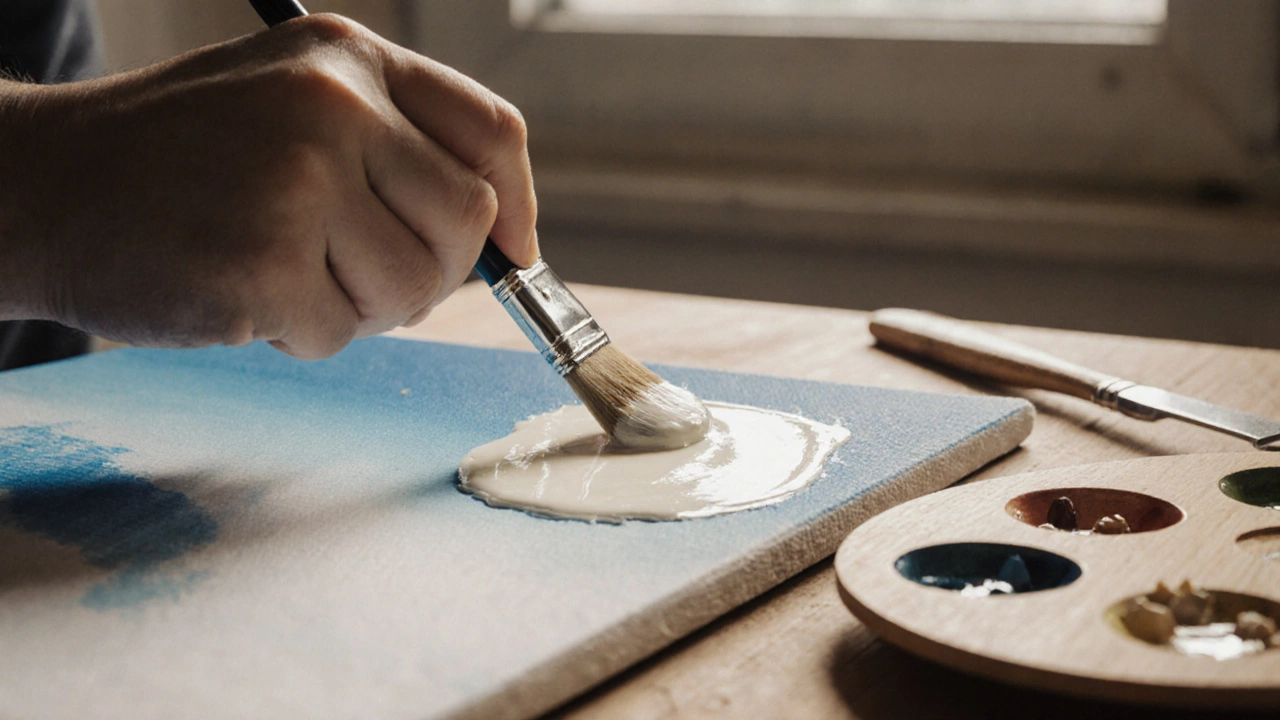
How to Get Smooth Oil Painting: Techniques for a Professional Finish
Learn how to achieve a smooth, professional finish in oil painting with practical techniques for blending, glazing, brushwork, and layering. No more brush strokes or rough patches.
When you blend oil paint, the process of combining two or more oil-based pigments on canvas or palette to create new hues and smooth transitions. Also known as color mixing in oil, it’s not just about making purple from red and blue—it’s about controlling texture, light, and emotion in every stroke. Unlike watercolor or acrylic, oil paint dries slowly, giving you hours to adjust, layer, and refine. That’s why so many artists—from beginners to pros—rely on blending to bring depth and realism to their work.
Blending oil paint isn’t just a technique, it’s a conversation between your brush, the paint, and the surface. Oil paint consistency, how thick or thin the paint feels when squeezed from the tube or mixed with medium. Also known as paint body, it determines how easily colors merge. Too thick? You’ll get harsh edges. Too thin? Colors muddy. Most artists start with straight-from-the-tube paint for bold areas, then add linseed oil or stand oil to smooth transitions. You don’t need fancy mediums—just a clean brush, a palette knife, and patience.
Related to this, wet-on-wet painting, a direct oil technique where fresh paint is applied over still-wet layers. Also known as alla prima, it’s the go-to method for capturing light quickly. This style is popular with plein air painters because it forces you to make decisions fast. Blending happens naturally as colors soften into each other on the canvas. You’re not waiting for layers to dry—you’re working in real time, letting the paint do some of the work. It’s messy, it’s immediate, and it’s how a lot of modern oil painters get that lively, breathing quality in their work.
What you won’t find in most tutorials is how much personality matters. One artist blends with soft sable brushes for smooth skies. Another uses stiff hog bristles to drag pigment into rough textures. Some add a touch of turpentine to speed up drying in certain areas. There’s no single right way. The posts below show real artists doing exactly this—mixing earth tones for portraits, layering glazes to make shadows glow, or using palette knives to create impasto blends that catch the light. You’ll see how simple color choices—like adding a whisper of ultramarine to a red—can make a skin tone feel alive. Or how blending too much can kill the energy in a landscape.
Whether you’re just starting or trying to fix muddy colors, the key is practice—not perfection. You don’t need expensive tubes of paint to learn this. A single tube of cadmium red and one of titanium white can teach you more than a full set if you know how to blend them right. The goal isn’t to make everything look like a Renaissance painting. It’s to make your brushstrokes feel intentional, your colors feel real, and your paintings feel like they breathe.
Below, you’ll find real guides from artists who’ve cracked this. From how to avoid muddy colors to which brushes actually work best, these posts cut through the noise. No fluff. Just what you need to start blending oil paint with confidence.
Learn how to achieve a smooth, professional finish in oil painting with practical techniques for blending, glazing, brushwork, and layering. No more brush strokes or rough patches.