Watercolor Substrate: What It Is and Why It Matters for Your Paintings
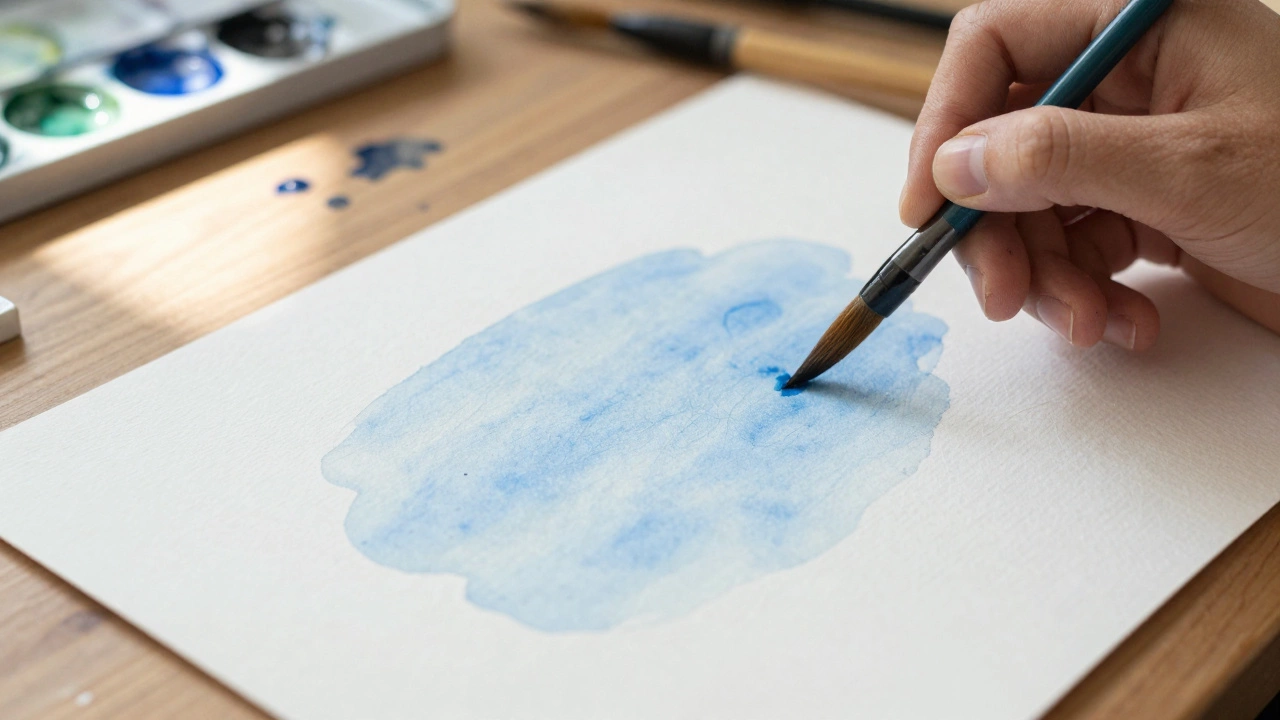
When you pick up a brush for watercolor, the first thing that matters isn’t your brush or your paint—it’s the watercolor substrate, the surface you paint on that controls how water and pigment behave. Also known as watercolor paper, it’s not just a blank canvas—it’s an active partner in your painting process. A bad substrate will soak up color too fast, warp under moisture, or refuse to let layers build up. A good one lets you control washes, preserve brightness, and layer without turning your painting into a muddy mess.
The right watercolor paper, a specialized type of paper designed to handle wet media without buckling or disintegrating comes in different weights, textures, and materials. Cold press, hot press, and rough aren’t just fancy names—they’re different surface finishes that change how paint sits and spreads. Cold press is the most popular because it gives you texture for grip but still lets you blend smoothly. Hot press is slick and smooth, great for fine details. Rough? It’s bold, grainy, and perfect for dramatic effects. Then there’s the weight—140 lb is the sweet spot for most artists. Anything lighter will buckle unless you stretch it. Heavier papers like 300 lb? They’re expensive but stay flat without any prep.
And it’s not just about paper. Some artists use watercolor blocks, pre-stretched pads glued on all sides to prevent warping, or even watercolor boards made with wood pulp and sizing. These aren’t gimmicks—they’re tools that solve real problems. If you’ve ever watched your painting curl up like a potato chip while you’re still painting, you know why this matters. The watercolor surface, the physical and chemical foundation that determines how pigment interacts with moisture affects everything: drying time, color intensity, edge control, and even how long your painting lasts. Cheap paper fades faster, bleeds uncontrollably, and can’t handle scrubbing or lifting. Good paper lets you fix mistakes, build depth, and keep colors vibrant for decades.
There’s a reason so many posts here talk about layering watercolor, avoiding mud, and getting luminous results—it all starts with the substrate. You can have the best brushes and the most expensive pigments, but if your surface doesn’t support them, you’re fighting an uphill battle. The artists in this collection know this. They don’t just paint—they choose their ground carefully. Whether you’re a beginner trying to figure out why your washes look dull, or someone who’s been painting for years and still struggles with buckling, the right watercolor substrate changes everything. What follows are real, tested tips from people who’ve learned this the hard way—no fluff, no theory, just what works on the paper, in the studio, and under real light.