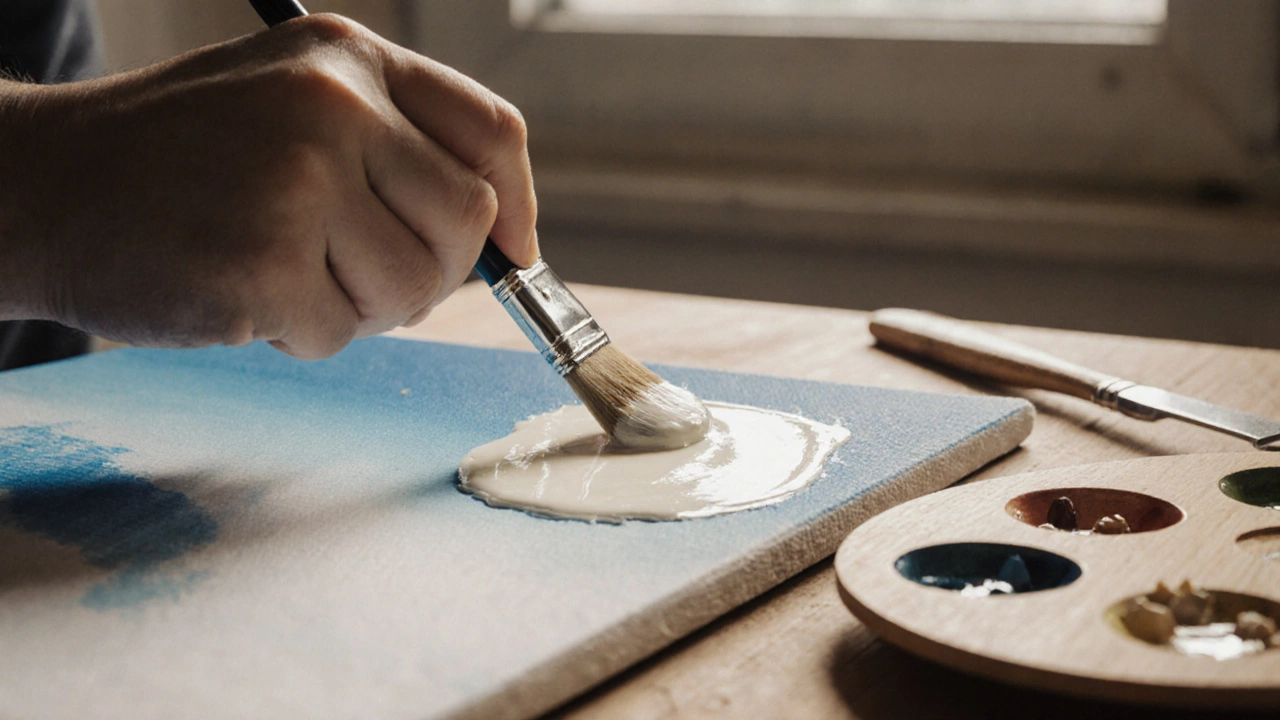
How to Get Smooth Oil Painting: Techniques for a Professional Finish
Learn how to achieve a smooth, professional finish in oil painting with practical techniques for blending, glazing, brushwork, and layering. No more brush strokes or rough patches.
When you see a smooth oil painting, a style of oil painting characterized by seamless brushwork, blended tones, and a polished, almost glass-like surface. Also known as glazed oil painting, it’s not just about applying paint—it’s about layering, patience, and controlling how light moves across the surface. This isn’t the bold, chunky strokes of alla prima. It’s the quiet precision of someone who lets each layer dry just enough before the next one glides on top, building depth without visible brush marks.
What makes a smooth oil painting, a style of oil painting characterized by seamless brushwork, blended tones, and a polished, almost glass-like surface. Also known as glazed oil painting, it’s not just about applying paint—it’s about layering, patience, and controlling how light moves across the surface. stand out isn’t the subject—it’s the finish. Artists who master this use glazing, a technique where thin, transparent layers of paint are applied over dried underpainting to deepen color and create luminosity. Also known as transparent layering, it’s the secret behind skin tones that look alive and skies that feel endless. It’s not magic. It’s about using the right medium—linseed oil, stand oil, or a mix—to keep paint fluid long enough to blend, then letting it dry slowly. Many skip this and rush with thick paint, ending up with a muddy or textured surface. But smooth doesn’t mean flat. It means controlled. It means the eye moves effortlessly across the canvas, pulled by subtle shifts in tone, not interrupted by brush strokes.
It’s also tied to oil painting varnish, a protective finish applied after the painting is fully dry to unify sheen and protect pigments. Also known as final varnish, it’s what gives that final glow—like a film over a wet surface, but permanent. Skip the varnish, and even the smoothest painting can look dull or uneven over time. And it’s not just about looks. The right varnish prevents yellowing and makes cleaning easier. That’s why artists who care about longevity don’t just paint smoothly—they finish smoothly too.
You’ll find plenty of posts here that dig into how to make your oil paintings pop—whether it’s choosing the right pigments, mixing colors without turning them gray, or using impasto to add texture in just the right places. But if you’re chasing that flawless, museum-quality surface, you’re looking at the same tools and habits used by the best portrait and still-life painters for centuries. No fancy gear needed. Just discipline, time, and a steady hand. What follows isn’t theory. It’s what works. Real artists, real results, real steps you can take starting today.
Learn how to achieve a smooth, professional finish in oil painting with practical techniques for blending, glazing, brushwork, and layering. No more brush strokes or rough patches.