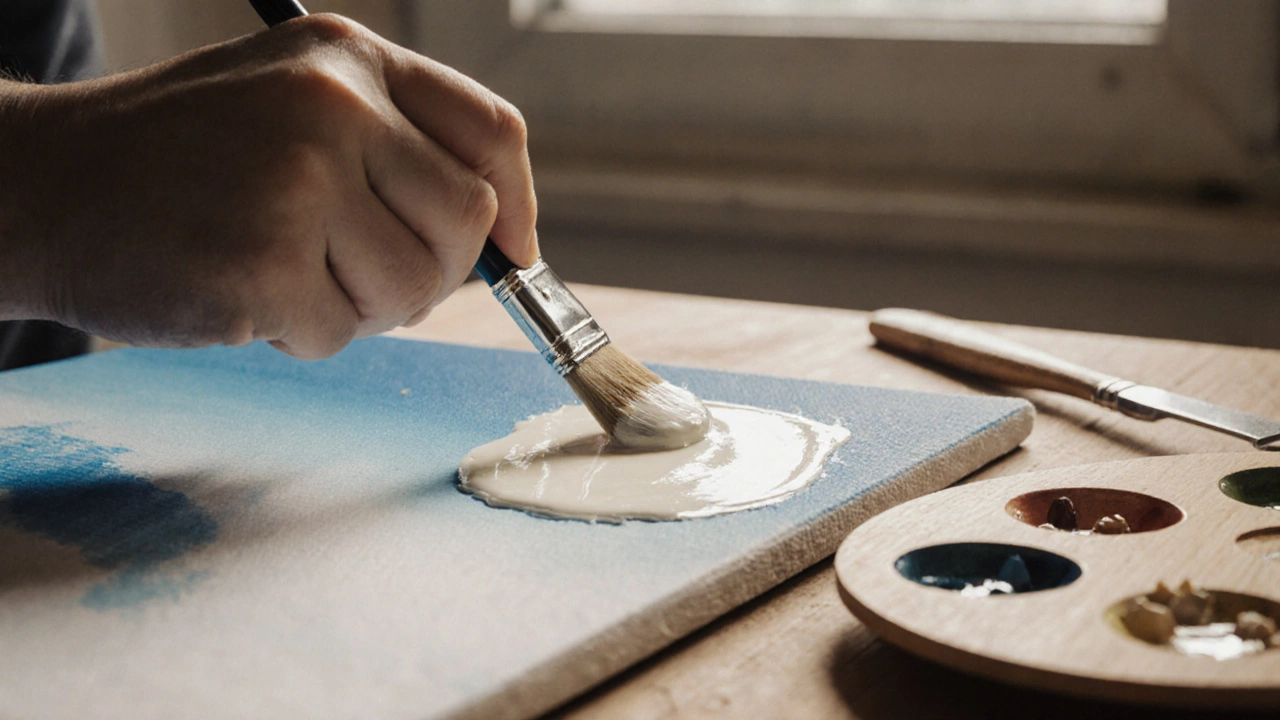
How to Get Smooth Oil Painting: Techniques for a Professional Finish
Learn how to achieve a smooth, professional finish in oil painting with practical techniques for blending, glazing, brushwork, and layering. No more brush strokes or rough patches.
When you finish an oil painting finish, the final protective layer applied to an oil painting to enhance color and shield it from damage. It's not just a coat—it's what turns a good painting into something that lasts decades. Many artists spend weeks on the brushwork, only to rush the last step. That’s like baking a cake and forgetting the frosting. Without the right finish, your colors fade, dust sticks, and UV light eats away at the pigment. A proper finish doesn’t just look better—it protects your time, effort, and investment.
There’s more to it than just grabbing any varnish. The oil painting varnish, a clear, protective coating applied after the paint has fully dried to unify sheen and guard against environmental damage you choose matters. Artists use two main types: retouch varnish for temporary protection while the paint dries, and final varnish for long-term sealing. The difference? One is meant to be removed, the other is meant to stay. And timing? Don’t rush it. Most experts wait 6 to 12 months before applying the final coat. Paint needs to cure fully—otherwise, the varnish traps solvents and turns cloudy. You can’t force nature. If you’ve ever seen a painting with a milky haze, that’s usually the sign of a finish applied too soon.
Then there’s the final coat oil painting, the last layer applied to seal and unify the surface appearance of a fully dried oil painting. It’s not just about shine. Matte, satin, and gloss finishes change how light hits the painting—and how people feel when they look at it. A glossy finish makes colors pop and draws the eye, while a matte finish softens the look, often better for modern or abstract work. And yes, you can mix them. Some artists use gloss on focal areas and matte on backgrounds to control attention. It’s a tool, not a rule.
And don’t forget cleaning. Dust, smoke, and even fingerprints build up over time. A good finish makes cleaning easier. You can gently wipe a varnished surface with a soft, dry cloth. Without it? You’re scrubbing paint itself. That’s why galleries and collectors always check the finish first. It’s not vanity—it’s preservation.
If you’ve ever wondered why some paintings look dull after a few years, or why others still glow like they were painted yesterday, the answer’s in the finish. The posts below cover everything from the exact products professionals use, to how to apply it without streaks, how to fix a bad job, and why some artists skip it entirely—and what happens when they do. You’ll find real-world advice from artists who’ve been there, mistakes they made, and the simple steps that made all the difference.
Learn how to achieve a smooth, professional finish in oil painting with practical techniques for blending, glazing, brushwork, and layering. No more brush strokes or rough patches.