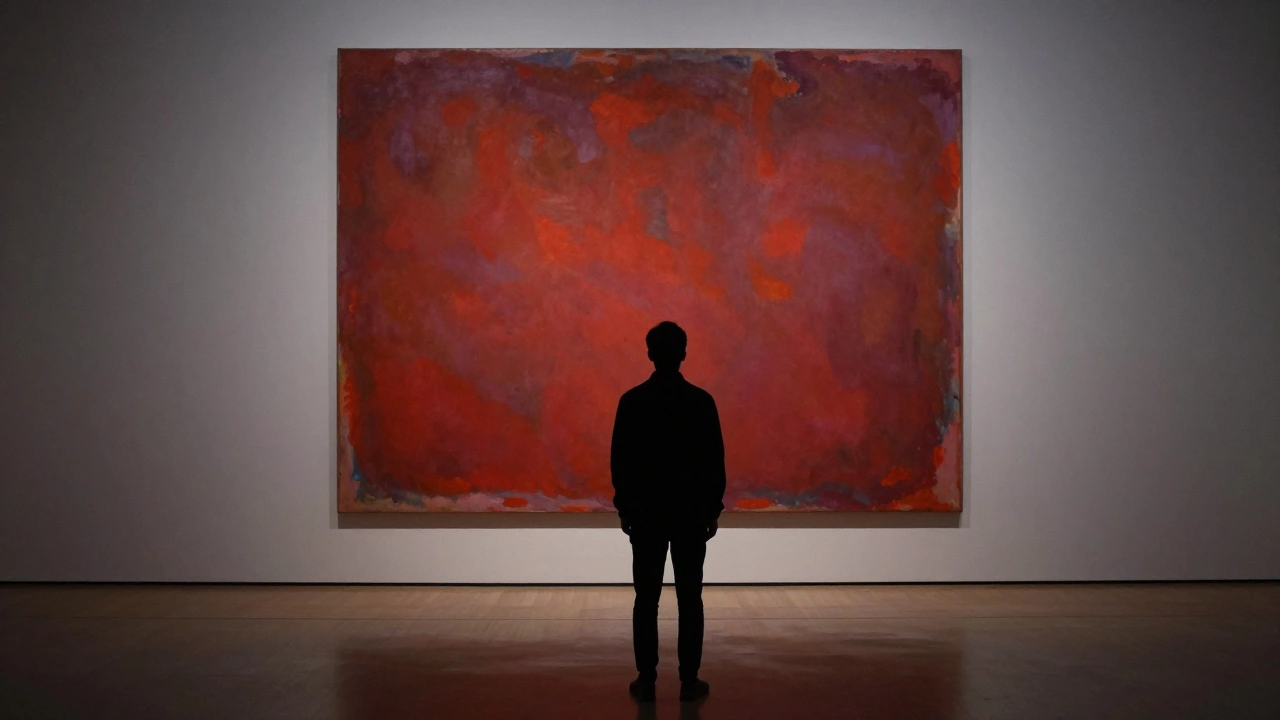
Art Interpretation: How to Understand and Connect with Modern Art
When you stand in front of a painting and wonder art interpretation, the process of making personal or cultural sense of visual art through observation, emotion, and context. Also known as art analysis, it's not about guessing what the artist meant—it's about what the work unlocks in you. You don’t need an art degree to do it. You just need to be willing to sit with the piece, let it breathe, and ask yourself: What does this make me feel? Why?
Many people think art has to be "understood" like a math problem, but modern art, a broad category of visual art produced roughly from the 1860s to the 1970s that broke from traditional forms and embraced experimentation doesn’t work that way. It’s more like music—you don’t need to know the notes to feel the emotion. That’s why posts here talk about how art psychology, the study of how visual art affects human perception, emotion, and behavior shapes what we see. A portrait isn’t just a face—it’s a memory, a mood, a statement. A splash of color isn’t random—it’s a punch to the gut or a sigh you didn’t know you were holding.
And it’s not just about the artist. art meaning, the significance assigned to a work by viewers, culture, or history, which can change over time shifts depending on who’s looking. A street mural might be vandalism to one person and a community anthem to another. A digital collage made on a phone? It’s not less valid just because it wasn’t painted with oil. That’s why articles here cover everything from how to turn your own art into prints to why anyone can make digital art—even without drawing skills. Art interpretation isn’t about skill level. It’s about honesty. Did it move you? Did it make you pause? Did it remind you of something you forgot? That’s the real answer.
What you’ll find below isn’t a textbook. It’s a collection of real questions real people ask: How do you tell if a piece is fine art or commercial? Why do some paintings feel alive while others feel flat? Can a landscape painting really tell you something about yourself? These aren’t theoretical debates. They’re everyday moments people have in front of a gallery wall, on their phone scrolling, or staring at a print on their own wall. You’re not here to memorize facts. You’re here to learn how to look—deeply, openly, without fear of being wrong.