Watercolor Painting Tips: Simple Tricks for Better Results
When you pick up a watercolor painting, a transparent, fluid art form using pigments suspended in water. Also known as watercolour, it’s one of the most accessible ways to create vibrant, spontaneous art—with just a brush, paper, and a cup of water. You don’t need years of training to get good results. What you need are a few real, tested tricks that take the guesswork out of the mess.
Most beginners struggle with watercolor supplies, the basic tools that make or break your painting experience. It’s not about buying the most expensive set. It’s about knowing what actually matters: good paper that doesn’t buckle, pigments that don’t muddy, and brushes that hold water without splaying. A single round brush size 8, some student-grade cadmium yellow and ultramarine blue, and 140lb cold press paper will get you further than a $200 kit you never learn to use. And forget the myth that you need to be "talented." watercolor techniques, the methods used to control flow, opacity, and drying time. Include wet-on-wet, wet-on-dry, lifting, and glazing—these aren’t secret codes. They’re just repeatable actions anyone can learn by doing, not by watching YouTube videos for hours. The real secret? Practice with limits. Paint the same subject—like a single apple or a simple tree—three times in one sitting. Notice how the paint behaves differently each time. That’s how you learn.
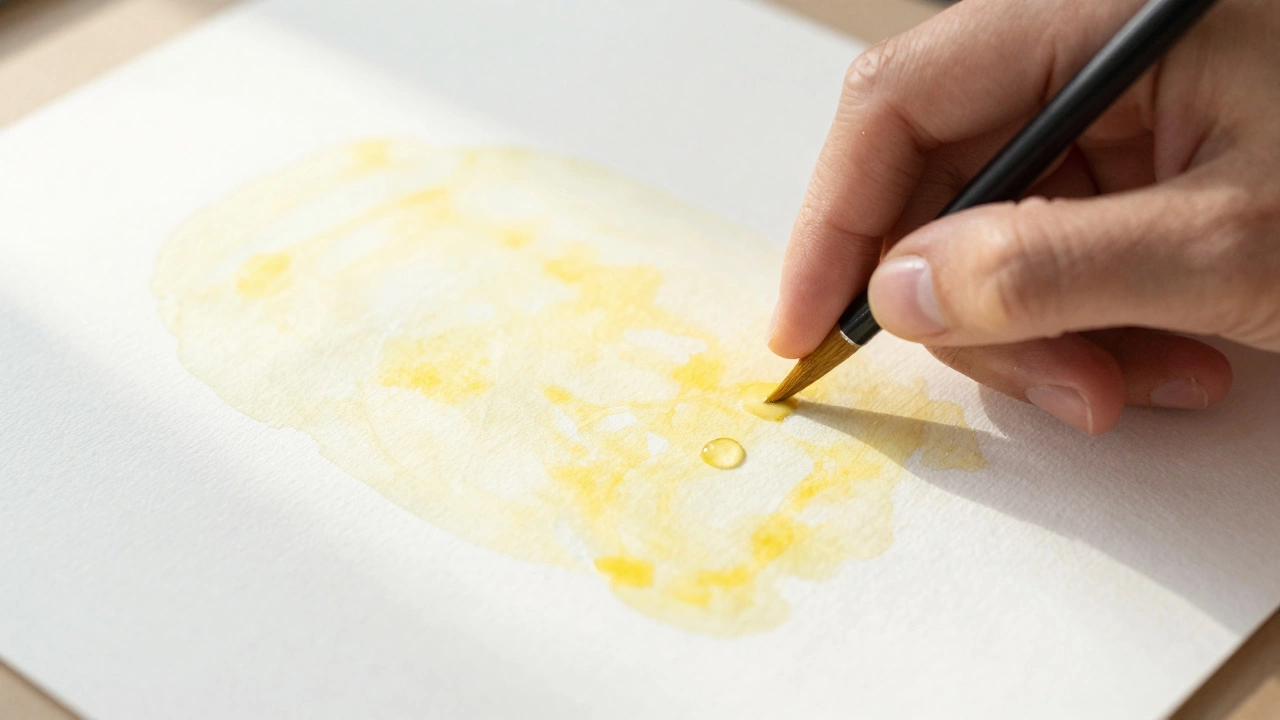
People think watercolor is unpredictable. It’s not. It’s consistent—if you understand the rules. Water flows where it’s wettest. Pigment settles where it dries slowest. A dry brush on dry paper gives you sharp edges. A wet brush on wet paper gives you soft blooms. You don’t need to control every drop. You need to work with the flow. That’s the whole point.
Below, you’ll find real posts from artists who’ve been there—beginners who figured out how to stop fighting the paint and start enjoying it. You’ll see simple subjects to try today, common mistakes to avoid, and what to buy without wasting money. No theory. No fluff. Just what works when you’re sitting at your table with a brush in hand and a cup of coffee beside you.