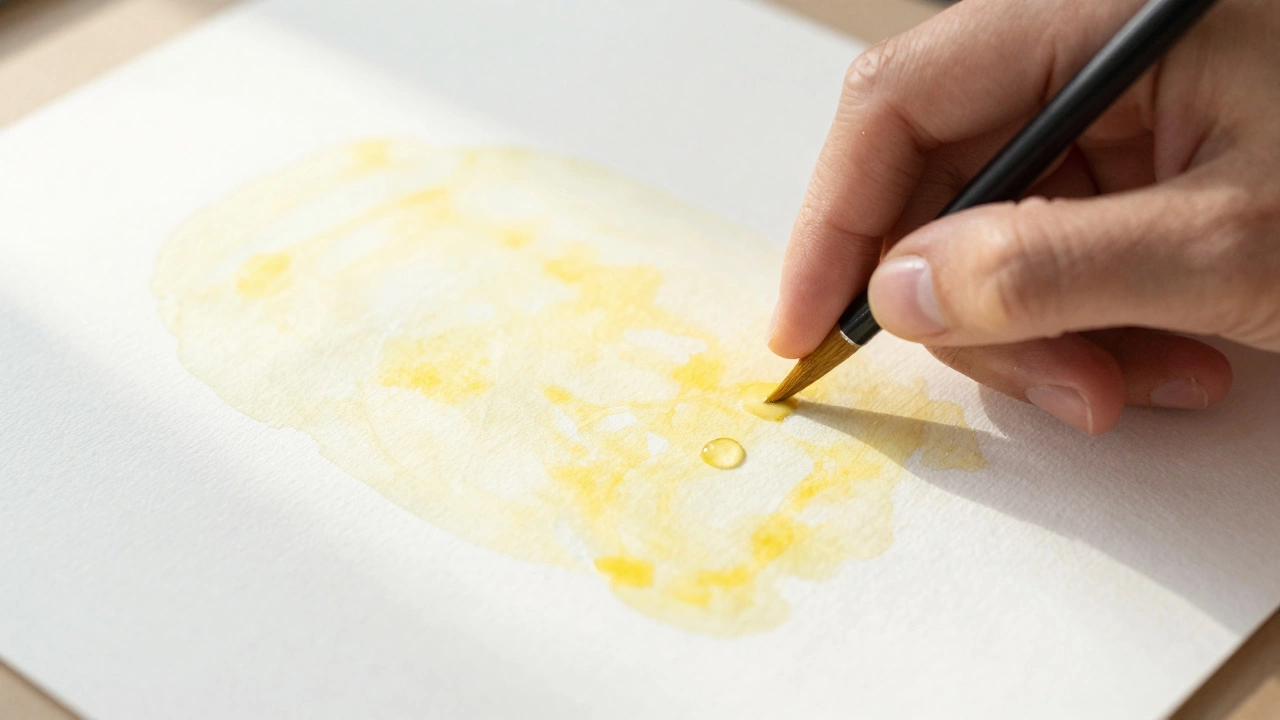
How to Layer Watercolor
When you layer watercolor, building up transparent washes one at a time to create depth and richness. Also known as glazing, it’s the secret behind luminous paintings that look like they’re lit from within. Most beginners think watercolor is about bold strokes and quick finishes—but the real magic happens when you let each layer dry and then add another. It’s not about painting more, it’s about painting smarter.
Layering watercolor isn’t just stacking paint. It’s a dance between water control, how much moisture you leave on the paper before adding the next stroke, and pigment transparency, whether the color lets light pass through or blocks it. If you use opaque paints too early, you kill the glow. If you rush a layer before it’s dry, you get muddy edges. Artists who master this know that patience isn’t optional—it’s the foundation. Think of each layer like a filter: a hint of blue here, a whisper of yellow there, slowly building a sky, a shadow, a leaf.
You don’t need fancy tools, but you do need to understand your paints. Some pigments, like cobalt blue or cadmium yellow, are naturally more transparent and perfect for layering. Others, like burnt sienna or ultramarine, can become muddy if overworked. Test your colors on scrap paper first. And always let the paper dry completely between layers—this isn’t just advice, it’s a rule. Wet-on-wet works for skies and soft blends, but for depth, you need wet-on-dry. That’s how you get clean edges and controlled color shifts.
Look at the posts below—they show you exactly how this works in practice. From easy subjects to avoid common mistakes, to how pros build dimension without ever touching a brush twice in the same spot. You’ll find tips on what paints to buy, how long to wait, and why your last painting turned gray when you didn’t mean it to. This isn’t theory. It’s what actually works when you’re standing at your easel, paintbrush in hand, wondering what to do next.