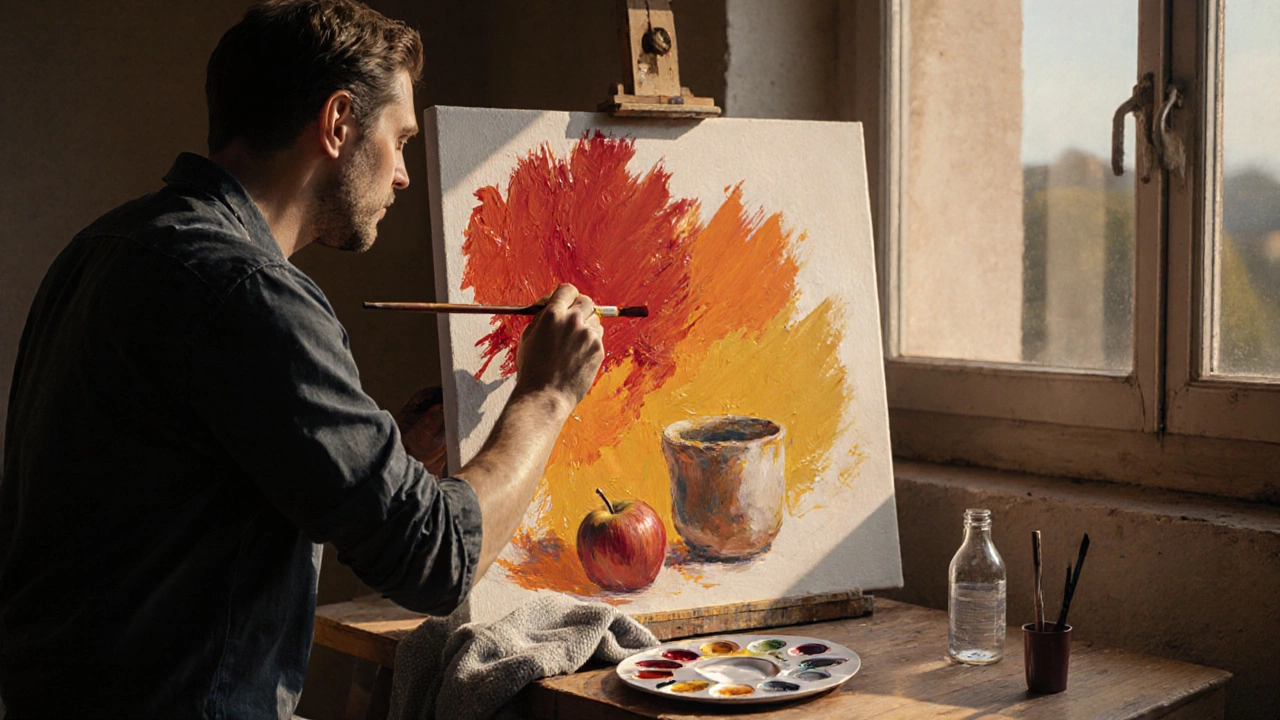
Fast Oil Painting: Quick Techniques, Tools, and Tips for Speedy Results
When you're trying to get results fast, fast oil painting, a method of creating oil paintings efficiently without sacrificing quality or depth. Also known as quick oil technique, it’s not about rushing—it’s about working smarter. Many artists assume oil painting takes weeks, but with the right approach, you can finish a strong piece in a single day—or even a few hours. It’s not magic. It’s strategy.
What makes fast oil painting, a practical approach for artists who want to produce work quickly without compromising on color, texture, or impact. Also known as direct painting, it relies on thin layers, limited palette choices, and controlled brushwork works is how it cuts through the noise. Forget waiting days for layers to dry. Instead, use alkyd mediums to speed up drying time, stick to 3-5 core colors to avoid muddy mixes, and go for bold brushstrokes over fine details. This style thrives on energy, not perfection. You’ll see this approach in many of the posts below—from tips on making your oil painting, a traditional art form using pigments suspended in drying oil, often associated with rich color and texture. Also known as oil on canvas, it’s one of the most enduring and versatile mediums in fine art vibrant to choosing the right beginner oil painting, a starting point for new artists using oil paints, often focusing on simple subjects and efficient methods. Also known as first oil project, it’s designed to build confidence through quick wins ideas that don’t require hours of planning.
Why Speed Matters in Oil Painting
Speed isn’t about cutting corners. It’s about staying in the flow. When you’re painting fast, you’re more likely to capture the mood, the light, the emotion—before it fades. That’s why many professional artists use fast oil techniques for sketches, studies, and even finished pieces. You don’t need to be a master to do this. You just need to know what to leave out. Skip the underpainting if you’re working alla prima. Use a limited palette. Pick a simple subject—like a single fruit, a window view, or a portrait with minimal background. The posts here show real examples: how one artist finished a portrait in under three hours, how another used impasto to add texture without waiting for layers to dry, and how mixing your own fast-drying medium can save you both time and money.
There’s a myth that slow equals better. Not true. Some of the most powerful oil paintings were made in a single sitting. Van Gogh didn’t wait weeks between strokes—he painted with urgency, and that’s what gave his work its life. If you’ve ever felt stuck waiting for paint to dry, or overwhelmed by how long a piece is taking, fast oil painting is your fix. It’s not about being perfect. It’s about being present. The collection below gives you exactly what you need: clear, no-fluff methods to paint faster, smarter, and with more confidence. You’ll find tools, tricks, and real-life examples from artists who’ve done this—and made it work.